
I went into Song Sung Blue already inclined to like it. I was something of a musical magpie from an early, impressionable age, discovering Neil Diamond through my father’s record collection; his taste was eclectic, ranging from jazz in all its forms to Mike Oldfield, with the occasional foray into classical. My enjoyment of Elvis came from my mother. Curiously, neither of them ever cared much for my favourite band, The Beatles, despite being of exactly the generation for whom that devotion might have seemed inevitable. In his opening monologue, Mike shares his unapologetic passion for simply good music. This film understands that instinctively. It is not interested in rescuing Diamond from irony or repackaging him for a new audience. It assumes affection, and trusts it.
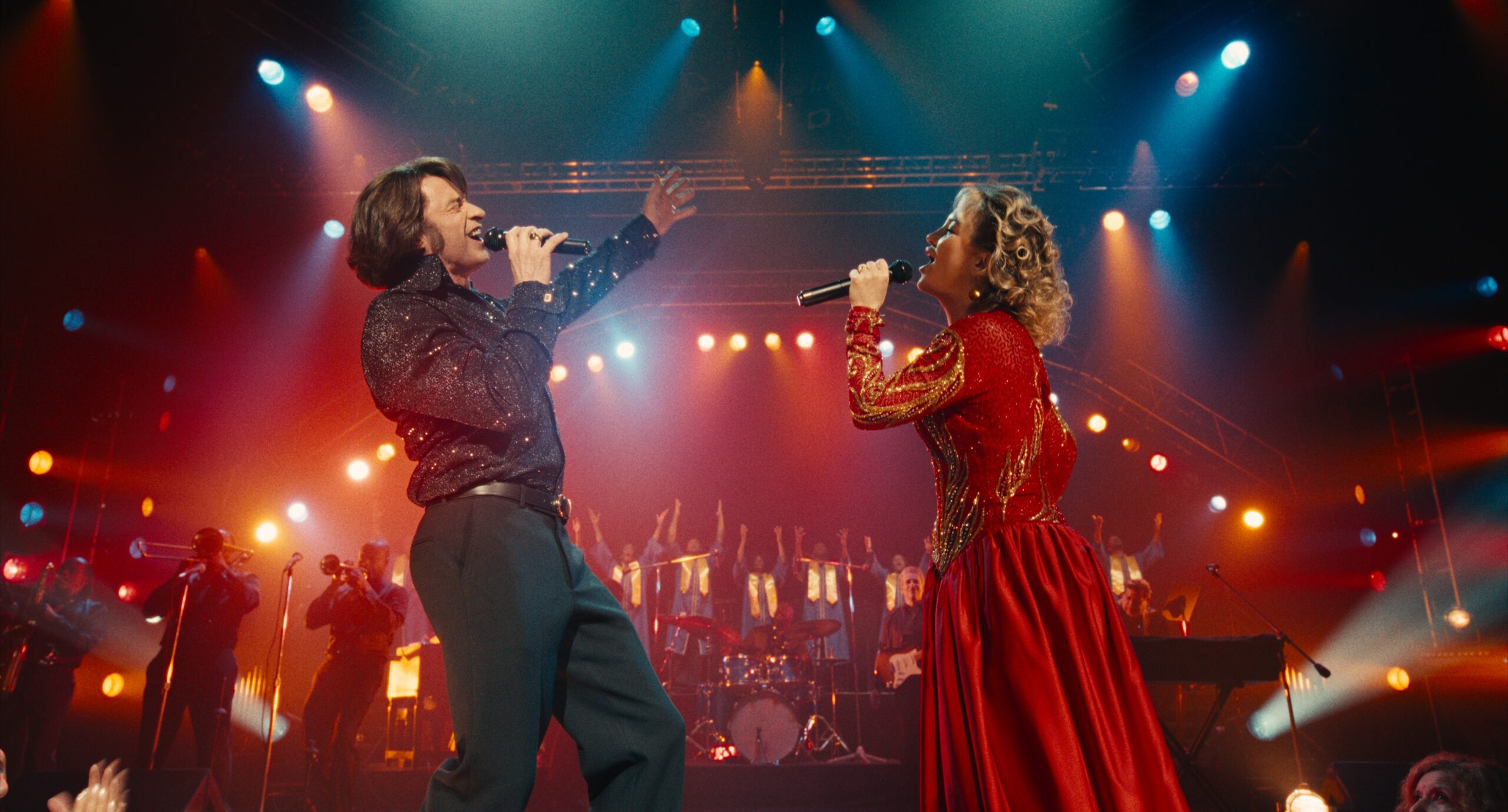
The film’s dramatic credibility rests on performance. Kate Hudson’s Oscar-nominated turn is deserved precisely because it is measured rather than demonstrative. She plays Claire, Mike’s partner on and off stage, as someone whose emotional life is shaped by watching, adjusting, and accommodating. Her work accumulates quietly. Meaning emerges in reaction rather than assertion, through a steady attentiveness to the people around her.

Hugh Jackman’s Mike operates on a very different register. He is loud, charismatic, and unapologetically performative, deliberately so. Long before Neil Diamond enters the picture, Mike already considers himself a fully fledged original as Lightning, frustrated by a sense of unrealised promise. The move into the tribute circuit is less a creative calling than a concession to audience demand and bookers’ tastes. That frustration animates Jackman’s performance. His Diamond is not an impersonation but an interpretation, filtered through years of performing as Lightning and shaped by ego, showmanship, and a refusal to disappear.
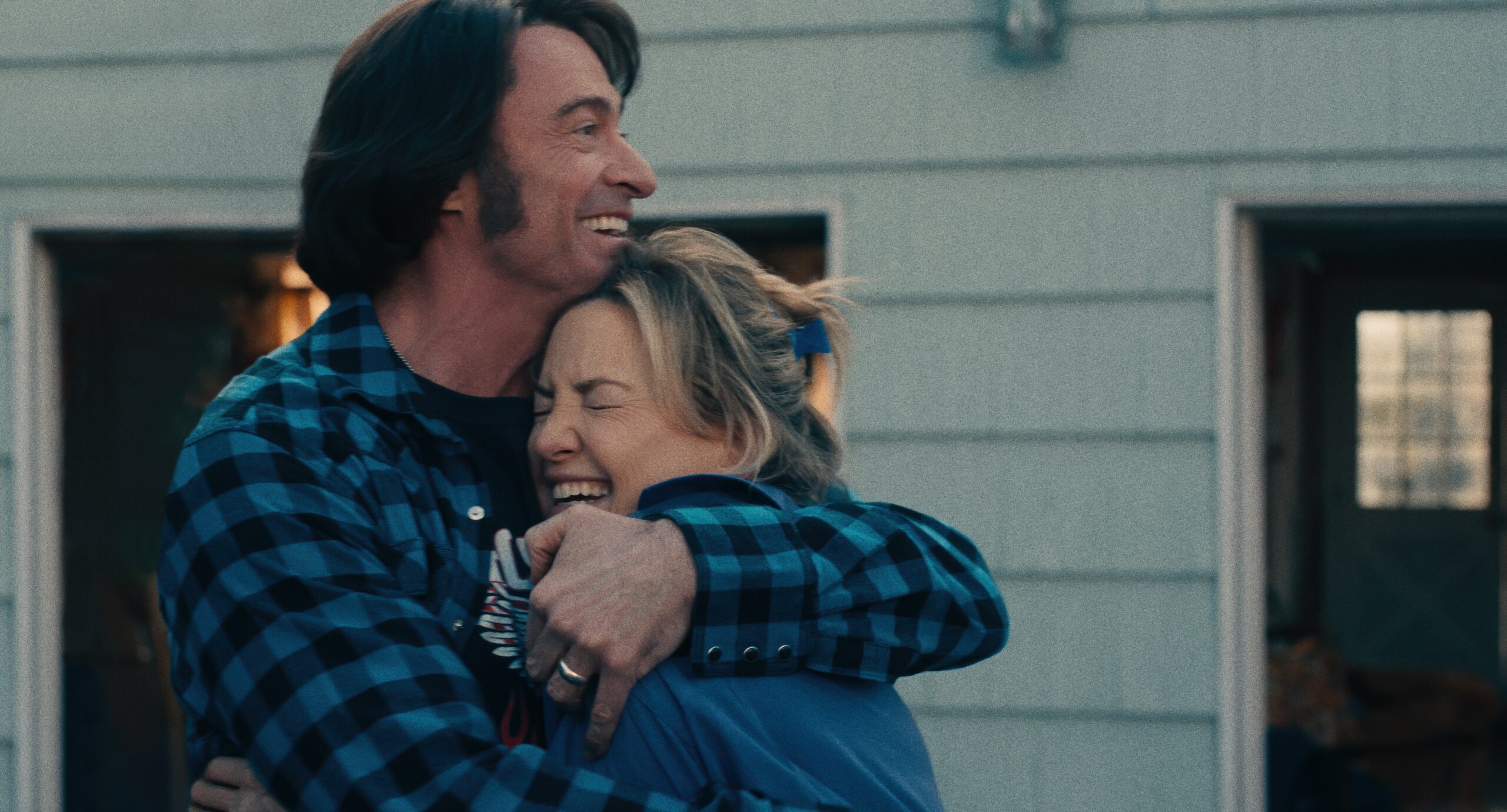
Claire’s emergence as Thunder is crucial here. Despite being a gifted singer in her own right, particularly of Patsy Cline songs, she consciously positions herself in support of Mike’s vision rather than in competition with it. Hudson plays this not as self-erasure but as creative alignment. Jackman’s performance is expansive rather than restrained, but it is no less controlled for that. The volume is intentional; the charisma is a tool. Together, the performances mirror the relationship at the film’s centre. Claire stabilises and sustains. Mike projects and propels. Neither works without the other.
Structurally, Craig Brewer’s film is braver than it first appears. Lightning & Thunder were a husband-and-wife Neil Diamond tribute act from Milwaukee, whose appeal lay less in mimicry than in the way performance and private life blurred, a dynamic captured in the quietly intimate 2008 documentary of the same name. Brewer leans into that intimacy in the film’s first half, which is warm, funny, and buoyant, and necessarily so. The humour is not incidental; it earns the audience’s trust. When the second act darkens, the shift can feel abrupt, even unsettling. Yet that disorientation is the point. Life does not announce its turning points neatly.

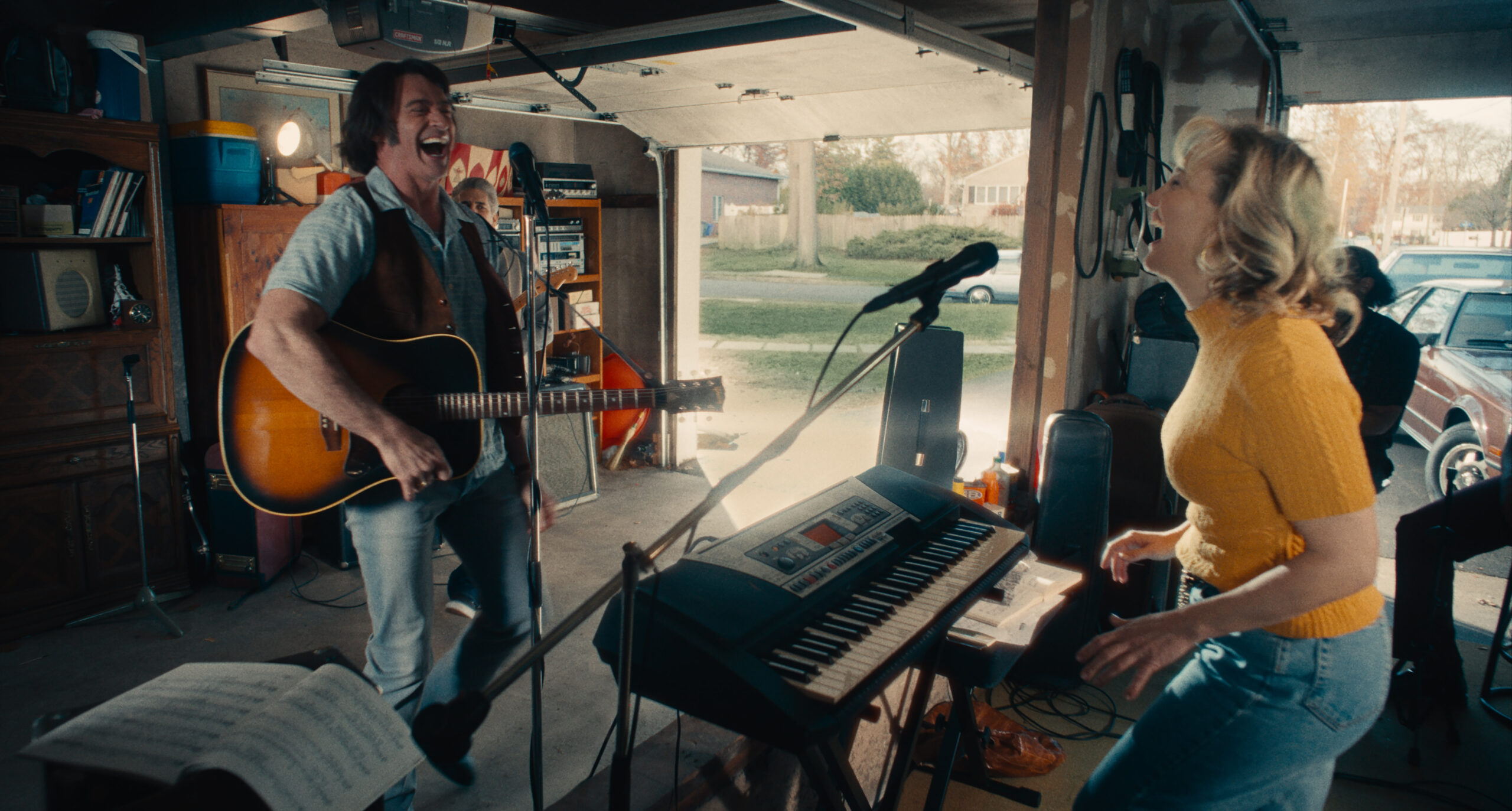
One of the film’s great pleasures is its attention to musical detail. Even in impromptu rehearsal settings, the staging feels lived-in rather than presented: microphone placement, breath control, missed cues, laughter bleeding into lyrics. These moments are allowed to remain imperfect. The music is not mythologised. It is inhabited. That authenticity pays off later, when the emotional meaning of the songs changes without needing to be underlined.
Claire and Mike’s daughters from previous relationships are quietly effective figures. They are not written as generational commentators or tonal correctives. Instead, they bring a modern sensibility through behaviour rather than dialogue. Rachel, navigating an unexpected pregnancy, is emotionally perceptive without being cynical. So is Angelina, whose concern for her father lingers despite 20+ years of his sobriety. Their presence prevents the film from slipping into cosy nostalgia, allowing the past to be gently observed and, at times, quietly questioned.
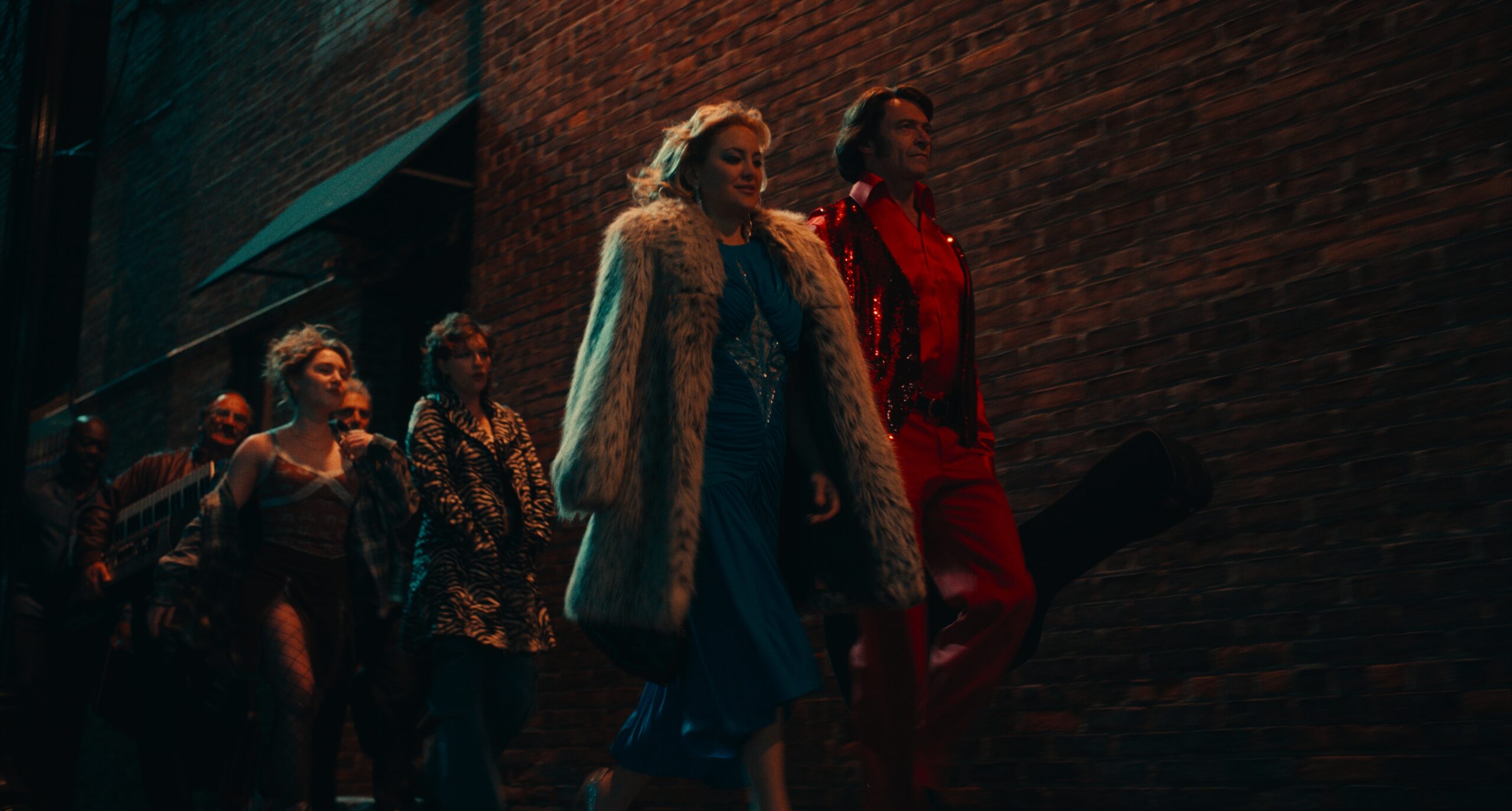
My one significant reservation concerns the film’s handling of time. The narrative is heavily compressed, and that compression is never fully resolved visually. None of the leads visibly age, nor do their children. As a result, a relationship that spans nearly two decades in reality plays on screen like a brief, intense chapter. Mike and Claire met in 1987 and married in 1994; Mike did not die until 2006. In the film, it feels closer to two or three years.
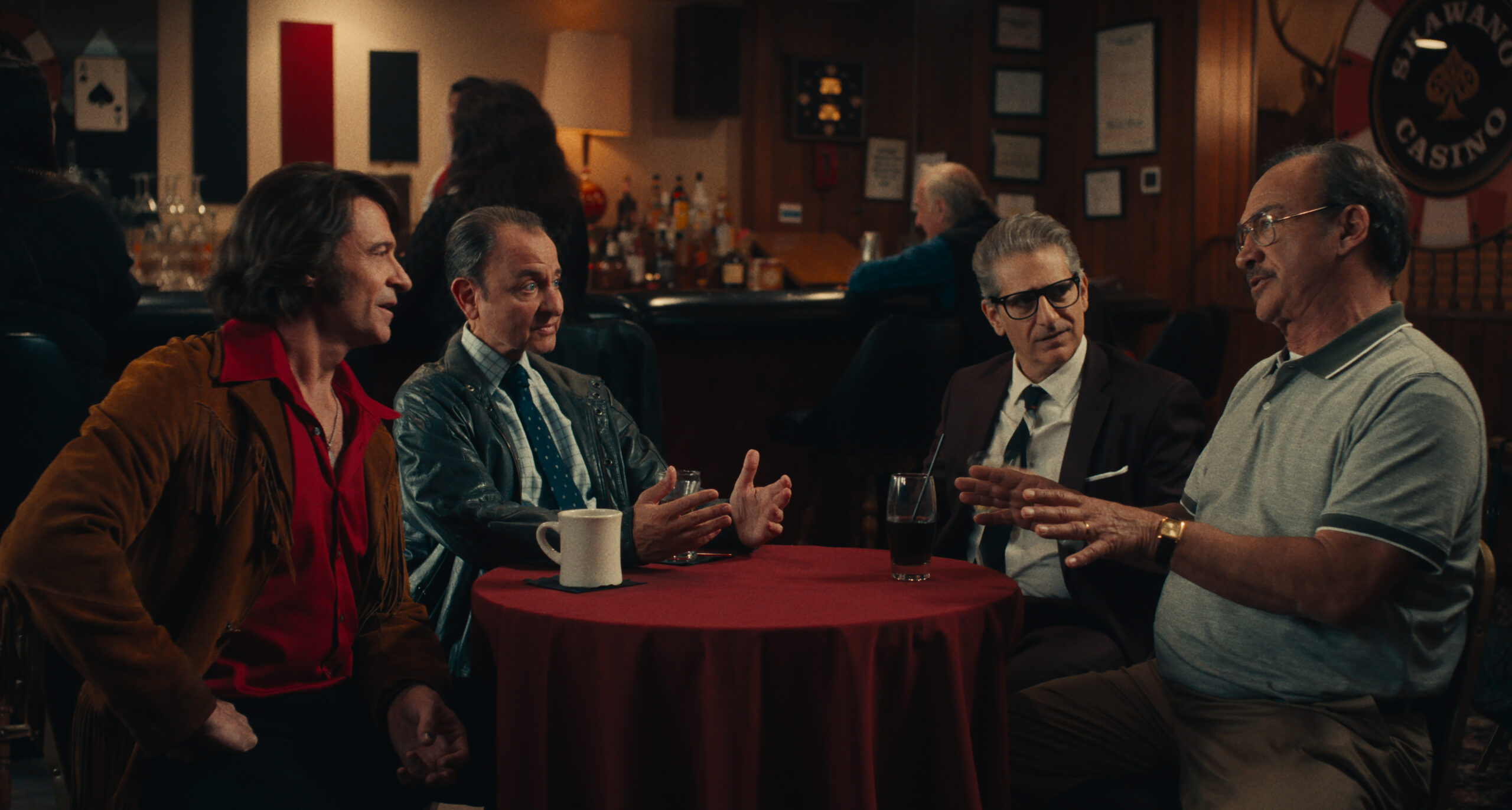
This matters because the film’s emotional core is not music, but partnership. Lightning & Thunder is not just a catchy stage name; it is a working arrangement, sustained over time. Lightning needs momentum, amplification, and belief. Thunder needs patience, grounding, and endurance. Those roles only gain emotional weight through repetition, through years of adjustment and recalibration. Without a felt passage of time, the audience understands the dynamic, but never quite experiences its cumulative cost.
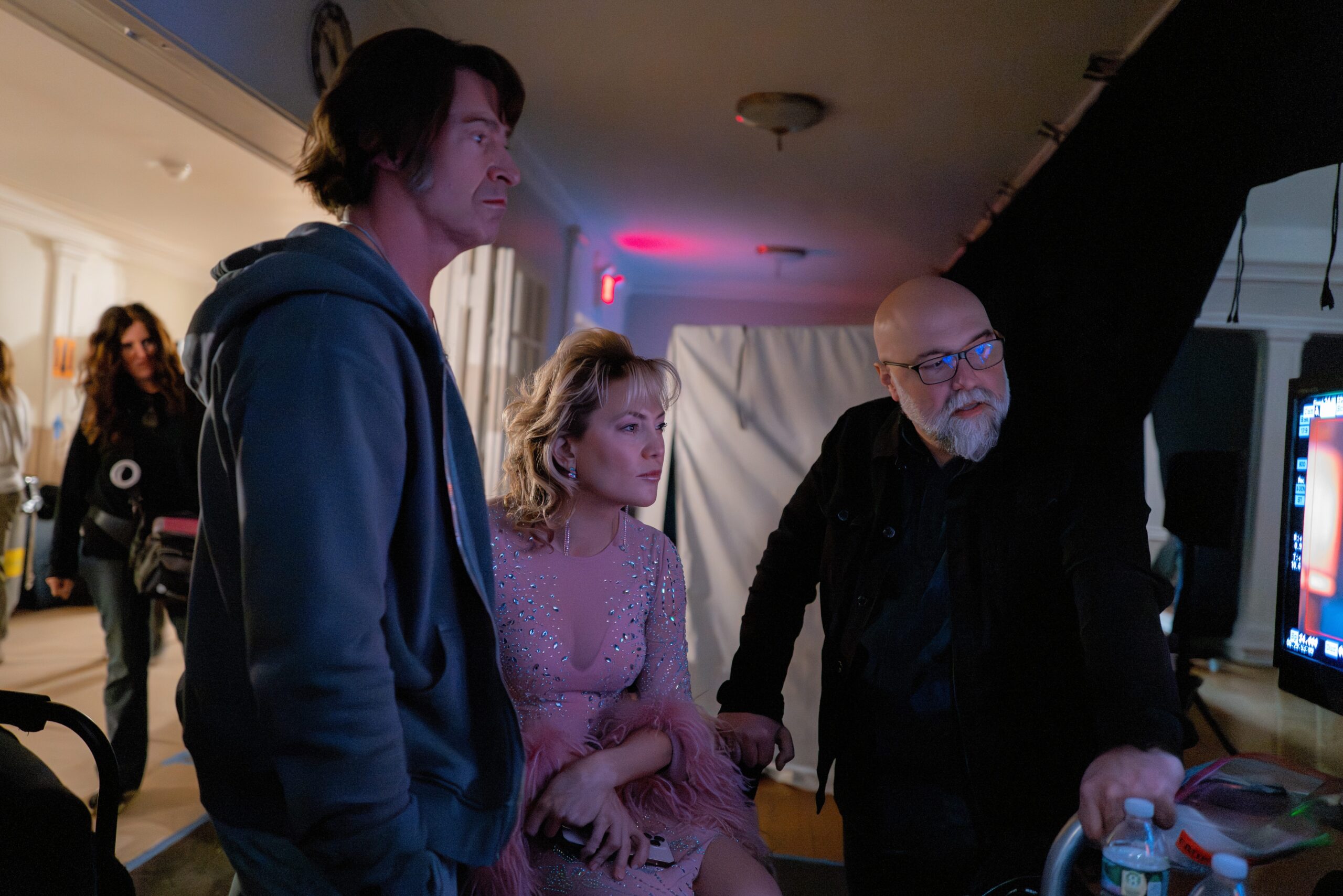
The film understands this idea thematically. Mike’s insistence on opening the act with Suleiman is a declaration of artistic fidelity, a refusal to let the tribute slide into impersonation. It is also a quiet resistance to the easy comfort of Neil Diamond as anthem, resolutely downplaying the overuse of Sweet Caroline in favour of something more personal. Claire’s choice to support that vision rather than foreground her own considerable talent operates on the same principle. But repetition only becomes sacrifice when time is allowed to accrue beneath it.
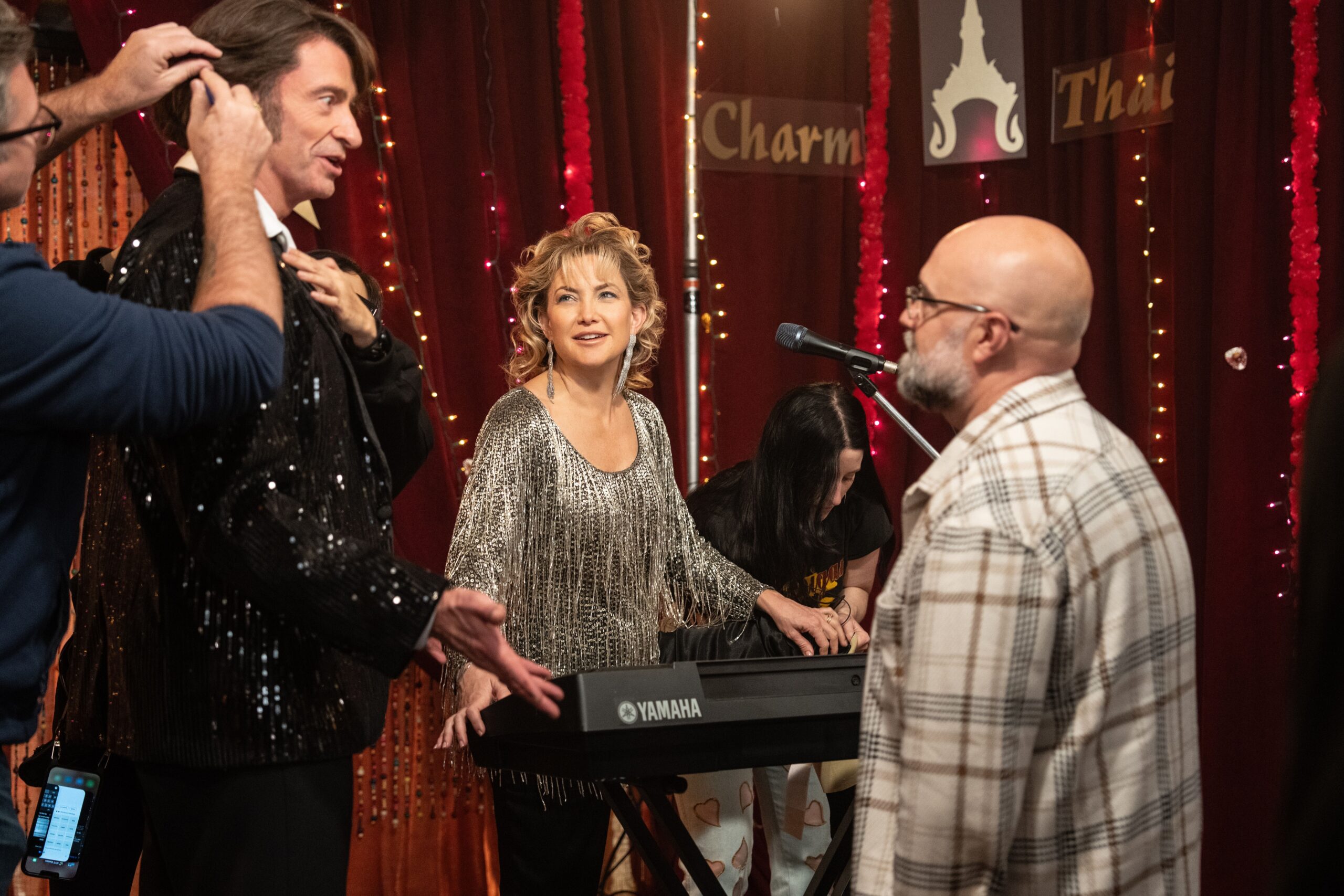
Ironically, the film already has the tools it needs: shifting domestic spaces, evolving musical habits, children growing into different emotional roles. A little more visual signposting, a little more willingness to let years register, would not have diluted the intimacy. It would have deepened it, allowing the Lightning & Thunder dynamic to feel not just vivid, but weathered.
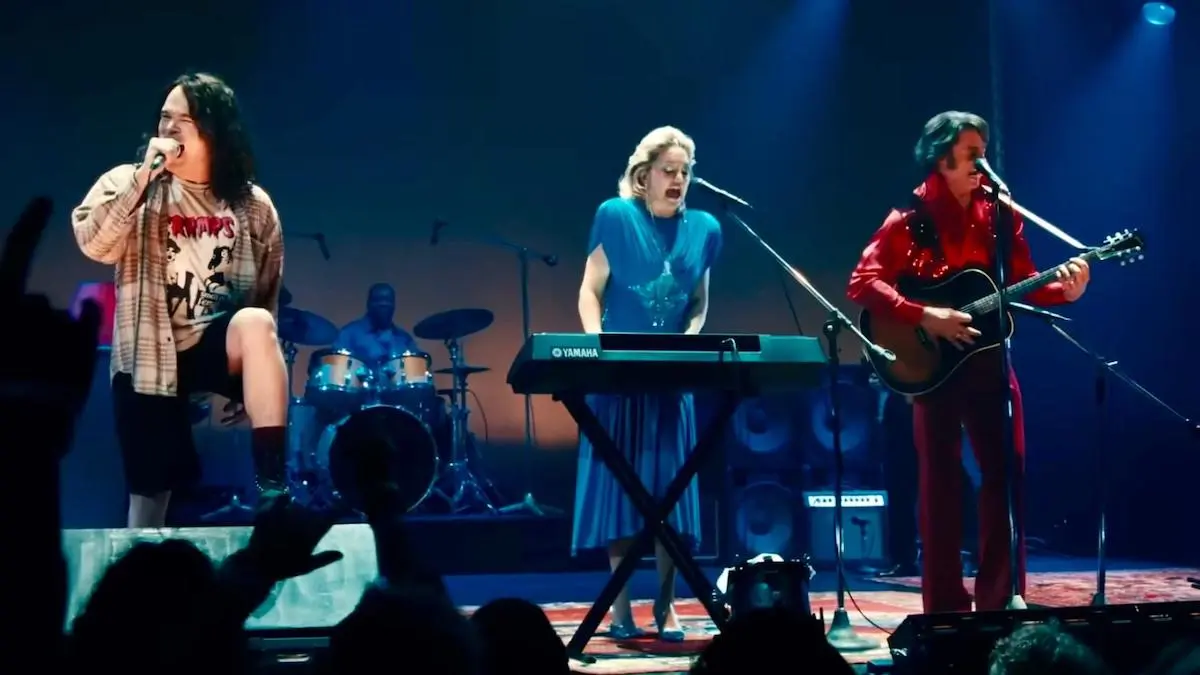
That partnership ultimately carries them further than either ever imagined. At the height of their popularity, Lightning & Thunder find themselves opening for Pearl Jam, an unlikely but quietly perfect cultural overlap. When Mike admits his nerves, Eddie Vedder puts him at ease with a simple line that lands as the film’s unspoken thesis: “Who doesn’t like Neil Diamond.” It is generous, uncomplicated, and true. In the end, Song Sung Blue understands this better than anything else. Not irony, not reinvention, but the endurance of music and love that people return to, time and again.