
Sister Wives understands something many films about repression miss: the most dangerous thing in a closed system isn’t rebellion, it’s tenderness.

Set inside a fundamentalist polygamous marriage, the film follows Kaidence and Galilee, two women bound by ritual, hierarchy, and a husband who barely needs to exert control because the structure does it for him. Their days are defined by chores, obedience, and proximity, and it’s within that enforced intimacy that something quietly radical begins to form.
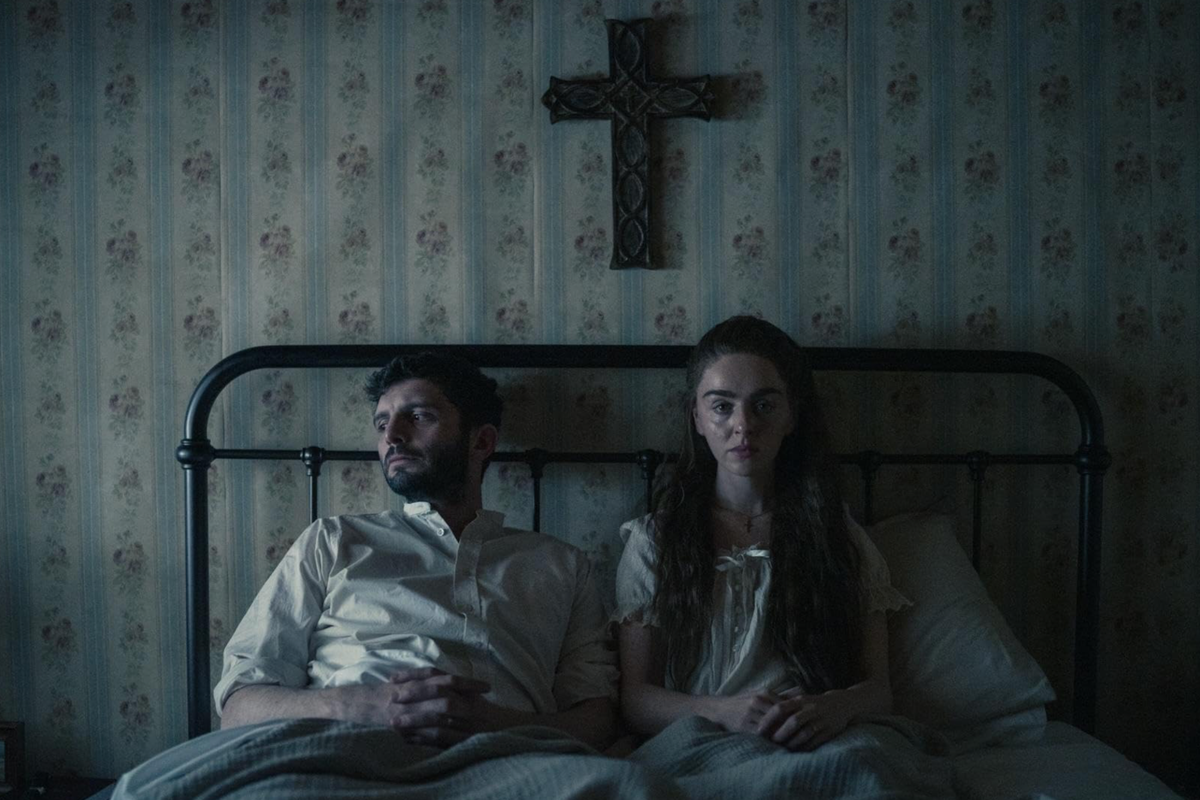
Louisa Connolly-Burnham directs with the precision of someone who knows exactly where the cracks are. No melodrama. No sermonising. Just glances held a beat too long, hands brushing while performing domestic rituals, and conversations that circle what cannot yet be named. The husband remains deliberately thin, less a character than a function, which sharpens the focus on the women and the emotional economy they are forced to share.

What’s most striking is how the film refuses the expected escape fantasy. There is no grand plan, no sudden awakening. Liberation emerges slowly as Kaidence and Galilee recognise that the connection between them offers something truer than the roles assigned to them. Intimacy becomes a form of dissent. Love, a quiet act of resistance.

Mia McKenna-Bruce gives Galilee a tightly wound vulnerability that makes every small choice feel seismic, while Connolly-Burnham’s Kaidence observes, absorbs, and eventually dares to respond. Both performances are restrained but deeply felt.

A short film that feels rigorously argued, emotionally intelligent, and quietly furious. No wasted frames. No false innocence.